All Shows
Live Shows
The following program is a live presentation. This involves student interactions and
participation. Each live presentation is tailored to the individual audience. This
program is approximately 1 hour in length, and is not available during the summer. Please call us if you have questions about this show.
Moonbeams
After watching the moon in the sky, students will look for ways to explain the changes
observed. Lunar folklore and moon travel also will be discussed.
Grades: 2nd - 5th
The Night Sky
A basic introduction to the sky. All of the bright planets and most of the brightest
stars and prominent constellations currently visible in the early evening will be
found. Storytelling and student interaction will be used to enhance learning.
Ages: All Ages
Preschool Sky
Basic awareness of the day and night sky are investigated with the help of models,
stories, and the planetarium projector. Due to the special characteristics of this
age group, the program length will vary between 30 minutes and an hour, according
to attention span.
Ages: 3-5 years
The Seasons
An overview of how the day and night sky change through the year. Students will predict
and observe how the sun's path changes over the year and learn how that relates to
changing seasons. They will learn why we see different constellations through the
year by looking from an earth and space-based perspective.
Grades: 4th - 6th
Sky Patterns
This show is geared toward early elementary students and addresses the 1st grade NGSS
standard about patterns in the sky. Students will orient themselves in the planetarium
using the Big and Little Dippers. Then they will make observations about day and night,
how the length of day changes through the seasons, and then how the Moon changes shape
over a month. Any time left will look at constellations in the sky.
Grades: K - 2nd
The Sun's Family
Solar system information is presented using models, photos, and student interaction.
Students learn to find the bright planets in the current sky.
Grades: K - 3rd
Pre-recorded Shows.
The following programs are recorded shows. Each lasts approximately 30 minutes and
is followed by a 30 minute live presentation of the current evening sky. The overall
presentation is approximately one hour in length.
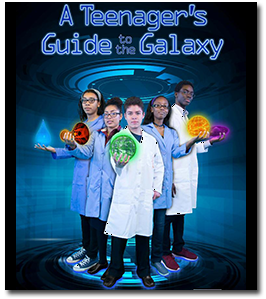
A Teenager's Guide to the Galaxy
Created and hosted by cosmically curious teenagers from Milwaukee schools, this unique
cosmic experience takes you on a dynamic journey across the universe and through time.
Science Topics Include: Black Holes, Cosmology--Origins & Fate of the Universe, Star
Cycles, Sun, Earth Origins & History, Water Origins & Chemistry.
Grades: 6th and up
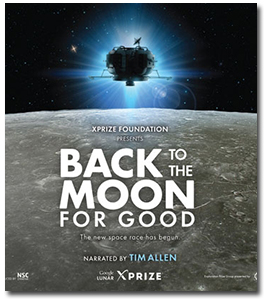
Back to the Moon for Good
This award-winning Google Lunar XPRIZE fulldome planetarium show chronicles teams
around the world competing for the largest international incentivized prize in history,
by landing a robotic spacecraft on the Moon. The show opens with the first era of
space exploration in the late 1960s and early 1970s and ends with a stunning glimpse
of a plausible scenario for our future on the Moon.
Grades: 6th and up
Bad Astronomy
Were the Apollo visits to the Moon actually a hoax? Have aliens landed on Earth? Can
you tell your future by the stars? Prepare to debunk and tackle pseudoscience head-on
with this planetarium show. Based on the popular book and website of the same name,
this show offers a unique and fun approach to learning about the cosmos. Join the
"Bad Astronomer" Phil Plait as he takes a critical look at popular myths and misconceptions
to show audiences how science can be used to evaluate questionable claims.
Grades: 6th and up
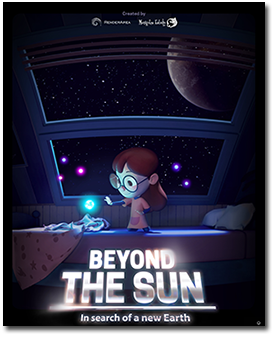
Beyond the Sun
While going to sleep, Celeste is visited by a friendly particle of light called Moon.
Together, they travel beyond the Sun in search of new worlds and enjoy the delights
and mysteries of exoplanet hunting. Find out how to detect exoplanets with Celeste
and Moon and learn about all the different types of worlds including rogue planets,
oceanic worlds and super-Earths. Even more, learn about real-life exoplanet hunters
who observe the sky and search for other planets that are like Earth.
Grades: 1st - 5th
Big Astronomy
It takes many people with diverse backgrounds, talents, and skills to run a world-class
observatory. Meet a few of these people as they share the wonder of the sky--and the
excitement of discovery. Explore the world-class observatories nestled in northern
Chile’s mountains and learn why Chile, is an ideal environment for studying the cosmos.
Grades: 5th and up
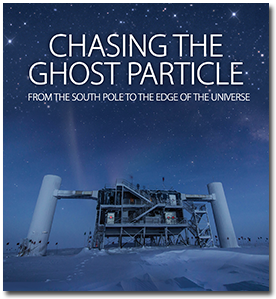
Chasing the Ghost Particle
Deep in the ice at the heart of Antarctica, IceCube, the biggest and strangest detector
in the world waits for mysterious messengers from the cosmos. Scientists are using
tiny and elusive particles called neutrinos to explore the most extreme places in
the universe. These ghostly neutrinos give us an exclusive way to study powerful cosmic
engines like exploding stars and black holes. In this show, stunning simulations of
the most energetic places in our universe, and the galaxies around us, are the prelude
to a thrilling journey inside IceCube, looking for traces of neutrino collisions in
the ice. From one of the most remote locations on Earth to the unexplored regions
of the cosmos, this show will take you on a journey you won't forget.
Grades: 8th and up
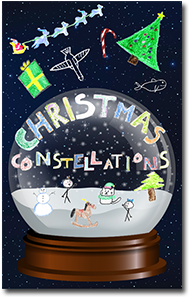
Christmas Constellations
When we look at the stars, we can play a giant game of dot-to-dot. We can use our
imaginations to come up with amazing things from basic shapes to mythical creatures
to our favorite animals. In this show, we will use our imaginations for a search through
the stars for holiday themed shapes in the sky. This show is suitable for preschoolers,
young elementary aged children, and their families.
Offered only from Thanksgiving to Christmas
Grades: K - 3rd
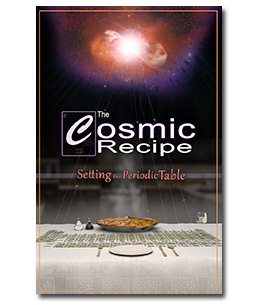
The Cosmic Recipe
Pull up a chair at our Planetarium’s Periodic Table and learn the cosmic recipes that
created everything in our world-even us! Discover how the Big Bang and the stars have
cooked up the everyday elements we interact with every day-like the calcium in our
teeth, the silicon in our smartphones, and even the carbon in our apple pies. Explore
the world of chemistry-the protons, neutrons and electrons! See how tiny atoms relate
to the mammoth stars! Connect the physical worlds of the small and large in this engaging
and inspiring show.
Grades: 6th and up
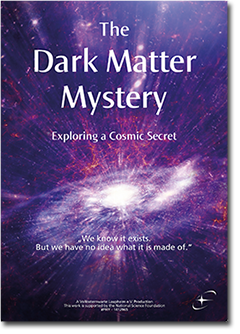
The Dark Matter Mystery
What keeps Galaxies together? What are the building blocks of the Universe? What makes
the Universe look the way it looks today? Researchers all around the world try to
answer these questions. We know today that approximately a quarter of the Universe
is filled with a mysterious glue: Dark Matter. We know that it is out there. But we
have no idea what it is made out of. This planetarium show takes you on the biggest
quest of contemporary astrophysics. You will see why we know that Dark Matter exists,
and how this search is one of the most challenging and exciting searches science has
to offer. Join the scientists on their hunt for Dark Matter with experiments in space
and deep underground. Will they be able to solve the Dark Matter Mystery?
Grades: 8th and up
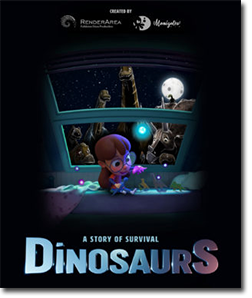
Dinosaurs
Like almost all children, Celeste is fascinated with dinosaurs. She is preparing a
talk for her class about how they went extinct when Moon, a very wise and magical
character, poses a tantalizing question: what if I told you that there are still dinosaurs
among us? Celeste will join Moon in a journey through time. An exciting adventure
that will show them the Earth as it was in the very, very distant past. They will
see the fascinating transformations that these animals underwent over millions of
years, creating giant creatures, armored beasts and super predators, until the day
that a cataclysmic impact event caused a mass extinction on Earth. But all is not
lost. Celeste will discover the key to their survival.
Grades: 1st - 5th
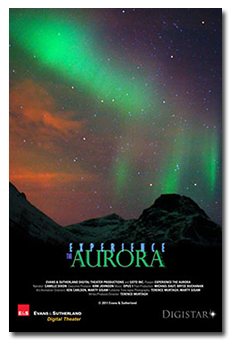
Experience the Aurora
Over seven months in the Arctic Circle, our crews captured timelapse images of the
Aurora Borealis with high resolution digital SLR cameras outfitted with fisheye lenses.
The results are spectacular. For the first time the aurora has been captured as it
was meant to be experienced, as a display that covers the entire sky. This immersive
show shares the science behind the aurora and tells the story of our quest to find
and photograph the aurora for wraparound display in fulldome theaters.
Grades: 6th and up
From Earth to the Universe
Follow along as we leave our home to take you out to the colorful birthplaces and
burial grounds of stars, and still further out, beyond the Milky Way, to the unimaginable
immensity of a myriad galaxies. Along the way, you will learn about the history of
astronomy, the invention of the telescope, and today's giant telescopes that allow
us continue to probe ever deeper into the Universe.
Grades: 6th and up
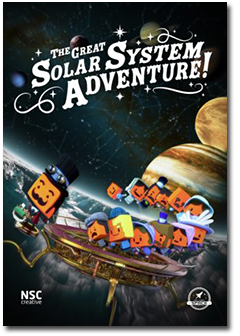
The Great Solar System Adventure
Join showman extraordinaire “The Great Schiaparelli” as he takes the audience on a
death-defying space-time adventure within his wondrous Observatorium. From the sun-scorched
surface of Mercury to the icy expanses of Pluto and beyond, prepare to be subjected
to the myriad dangers and wonders of our Solar System, on a breathtaking tour that
reveals just how precious our home planet really is. Be warned though, the Observatorium
isn’t just for show. It will transport the audience right to the heart of some of
the deadliest locations in our slice of the heavens. It’s going to take some fancy
flying to get everyone back in one piece!
Grades: 2nd - 5th
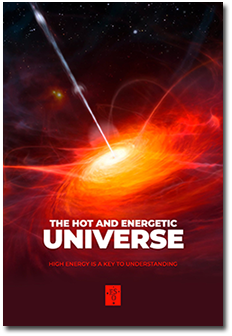
The Hot and Energetic Universe
This show describes the basic principles electromagnetic radiation and the natural
phenomena related to high energy astrophysics. High energy astrophysics plays a key
role in understanding the universe. These radiations reveal the processes in the hot
and violent universe. High energy astrophysics probes hot gas in clusters of galaxies,
which are the most massive objects in the universe. It also probes hot gas accreting
around supermassive black holes in the centers of galaxies. Finally, high energy radiation
provides important information about our own galaxy, neutron stars, supernova remnants
and stars like our Sun which emit copious amounts of high energy radiation.
Grades: 8th and up
Ice Worlds
The delicate balance between ice, water and the existence of life has been a topic
of exploration and discovery in science for generations. In travels to the Arctic
and Antarctic regions of our planet, we'll examine the ecosystems that live and thrive
there and see how their survival is connected with our own. Beyond Earth, we'll see
how the existence of ice shapes the landscape and the natural systems on other planets
and moons in our solar system.
Grades: 6th and up
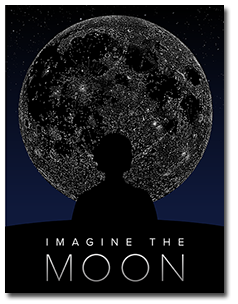
Imagine the Moon
Explore how the Moon has inspired human creativity, learning, and exploration ever
since we have looked to the sky. Each discovery has brought new opportunities to contemplate
and imagine, until, driven by dreams, we left Earth and went there in the amazing
journeys that culminated in astronauts walking on the Moon. People have imagined the
Moon as a glowing disk in the sky, a destination in space, and a world that shares
its origin with the Earth. The power of human imagination continues to inspire our
relationship with the Moon as our partner in space and companion in our sky.
Grades: 5th and up
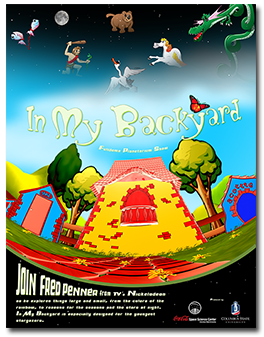
In My Backyard
Join children's entertainer Fred Penner as he explores things large and small, from
the colors of the rainbow, to the reasons for the seasons. Through the use of entertaining
songs and immersive environments, children are encouraged to participate while learning
about the planets, constellations, meteors, the moon and more.
Grades: Preschool - 1st
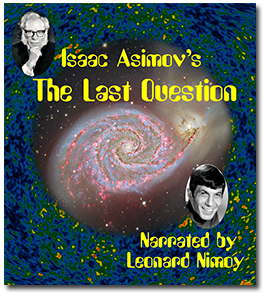
Isaac Asimov's The Last Question
Can entropy be reversed? What is the fate of the universe? Explore these questions
in this timeless short story written by one of the greatest science fiction authors
of the 20th century.
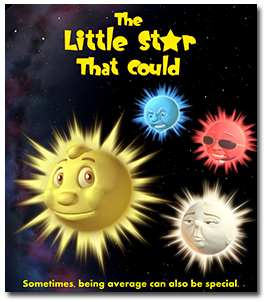
The Little Star That Could
The story about an average yellow star on a search for planets of his own to warm
and protect. Along his way, he encounters other stars, learns what makes each star
special, and discovers that stars can combine to form clusters and galaxies. Eventually,
Little Star finds his planets, and each is introduced to audiences along with basic
information about the Solar System.
Grades: 2nd - 5th
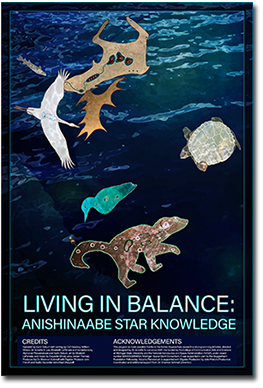
Living in Balance
Living in Balance: Anishinaabe Star Knowledge highlights Anishinaabe stories of constellations
and moons in relation to contemporary insights about environmental changes. Teachings
shared by Native Skywatchers Carl Gawboy, William Wilson, and Dr. Annette S. Lee are
narrated by Aarin Dokum with Anishinaabemowin translations by Alphonse Pitawanakwat
set to art by Elizabeth LaPensée.
Grades: 5th and up
Mayan Archaeoastronomy
In a feast of colors and sounds, this show takes a tour of 6 Mayan temples: San Gervasio,
Chichen Itzá, Uxmal, Edzná, Palenque and Bonampak where the spectator dives into a
Mayan world of knowledge about the importance of the orientations of its temples in
relation to the movement of some stars like the Sun, the Moon and Venus.
Grades: 8th and up
Messengers of Time and Space
This planetarium show highlights how Gemini will work together with observatories
that monitor the night sky for exciting astronomical events that change with time,
like Rubin Observatory. Sometimes, light is not the only indicator of these short-term
events. Audiences will learn how information can reach us through other messengers
like cosmic rays, elusive particles called neutrinos, and even gravitational waves
rippling through the Universe.
Grades: 8th and up
Natural Selection
"Natural Selection" celebrates the 150th anniversary of the publication of "On the
Origin of Species" and the 200th anniversary of Charles Darwin's birth. We will join
Darwin on his voyage with the HMS Beagle to the Galapagos Islands where he was inspired
to develop his later theory of transmutation by natural selection. From the comfort
of Down House in Kent, Darwin himself will explain the mechanism of natural selection
to the audience, and support it by showing many beautiful examples in nature. Even
though this show focuses on biology and evolution, a brief astronomical sky talk will
follow.
Grades: 8th and up
North Star and Meteors
Listen to stories of the stars told by Native American Master Storytellers. In this
show, you will hear two stories. "Why the North Star Stands Still" retold by Lynn
Moroney (Chickasaw) and "Coyote and the Dancing Stars" retold by Lynn Moroney (Chickasaw).
Grades: 3rd and up
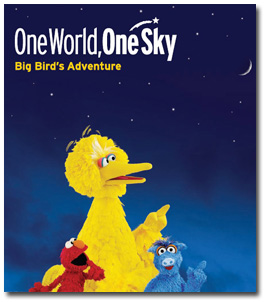
One World, One Sky
You don't need a spaceship to learn about the sun, moon, and stars-just a little imagination!
When Big Bird, Elmo, and their friend from China, Hu Hu Zhu, take an imaginary trip
to the moon, they learn amazing things along the way.
Grades: Preschool - 1st
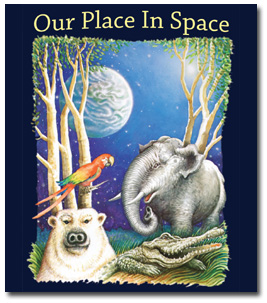
Our Place in Space
While solving a crossword puzzle about the sky, Scarlet Macaw and her friends explore
the cause of day and night, the importance of our star the Sun, the beauty of the
constellations, and the variety of objects that make up the Universe.
Grades: Preschool - 2nd
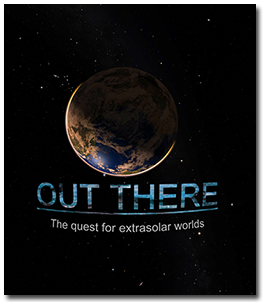
Out There: The Quest for Extrasolar Worlds
Out There: The Quest for Extrasolar Worlds shows how our perception of our place in
the Universe has changed and how the discoveries of exoplanets we made in the last
decades even surpassed the dreams of science fiction authors.
Grades: 6th and up
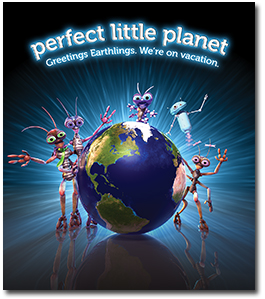
Perfect Little Planet
Discover our solar system through a new set of eyes-a family from another star system
seeking the perfect vacation spot. Fly over the surface of Pluto, our best known Dwarf
Planet. Dive down the ice cliffs of Miranda. Sail through the rings of Saturn. Feel
the lightning storms at Jupiter. And walk on the surface of Mars. Which destination
would you choose?
Grades: 1st - 5th
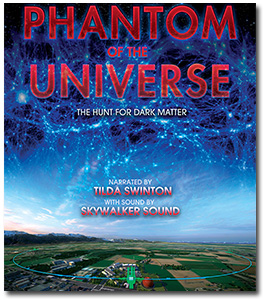
Phantom of the Universe
Join us as we showcase an exciting exploration of dark matter, from the Big Bang to
its anticipated discovery at the Large Hadron Collider. See the first hints of its
existence through the eyes of Fritz Zwicky, the scientist who coined the term "dark
matter." From there explore the astral choreography witnessed by Vera Rubin in the
Andromeda Galaxy and then plummet deep underground to see the most sensitive dark
matter detector on Earth, housed in a former gold mine. Finally journey across space
and time to the Large Hadron Collider at CERN, to learn how scientists around the
world are collaborating to track down the constituents of dark matter.
Grades: 8th and up
Pink Floyd
Fully immerse yourself in Pink Floyd's Dark Side of the Moon in our planetarium theater with our stunning visuals that make this album come to
life.
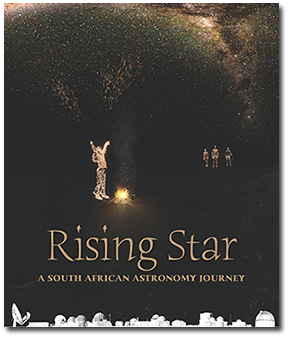
Rising Star
Rising Star takes you on an astronomical journey from our beginnings through the development
of astronomy research in South Africa and looks at what the future of astronomy holds
for the country. In addition to introducing multi-wavelength and multi-messenger astronomy,
it highlights the many remarkable facilities hosted in South Africa along with some
of their latest results. This includes unrestricted views of the 10-metre class Southern
African Large Telescope and the most powerful radio telescope in the Southern Hemisphere,
MeerKAT. The film is accessible to all ages and aims to excite audiences from around
the world about South African astronomy, while inspiring the next generation of astronomers.
As the first of its kind to be produced in Africa, Rising Star hopes to stimulate
the production of many more locally produced planetarium films from multidisciplinary
fields, with the goal of popularizing Africa’s numerous scientific achievements.
Grades: 8th and up
Season of Light
Many of the familiar customs that we observe this time of year have an astronomical
connection. Our holiday offering explores the traditions that we associate with this
special season.
Offered only from Thanksgiving to Christmas
Seasons and the Moon
Listen to stories of the stars told by Native American Master Storytellers. In this
show, you will hear two stories. "Spring Defeats Winter" retold by Joseph Bruchac
(Abenaki) and "The Girl Who Married the Moon" retold by Gayle Ross (Cherokee).
Grades: 3rd and up
Skywatchers of Africa
For thousands of years, Africans have used their knowledge of the sky to build their
societies, shape their spiritual lives, and meet their physical needs for survival.
Skywatchers of Africa highlights the diversity of African astronomy, examines cultural
uses of the sky that developed throughout history, and celebrates our shared human
experience.
Grades: 5th and up
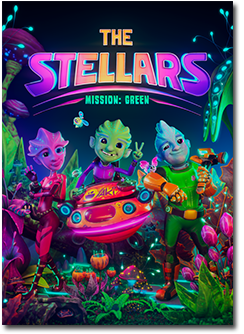
The Stellars
Introducing THE STELLARS, a show designed with the youngest audiences in mind. The
show weaves important educational themes into a character-driven story. It is the
perfect blend of fun and learning, carefully crafted to spark the imagination and
curiosity of young kids. The characters even break the “fourth wall” several times
to directly engage with the audience about their ideas. The educational content of
the show explores the essentials necessary for plant growth, the diversity of Earth's
ecosystems, and the critical role of forests as habitats. It underscores our bond
with nature and our role in preserving it, along with the importance of the scientific
method in understanding our world.
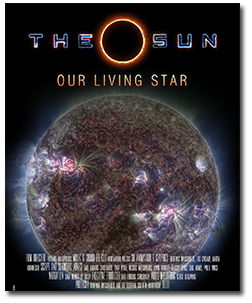
The Sun Our Living Star
The Sun has shone on our world for four and a half billion years. The light that warms
our skin today has been felt by every person who has ever lived. It is our nearest
star and our planet's powerhouse, the source of the energy that drives our winds,
our weather and all life. The passage of the Sun's fiery disc across the sky - day
by day, month by month - was the only way to keep track of time for countless past
civilizations. Discover the secrets of our star in this planetarium show and experience
never-before-seen images of the Sun's violent surface in immersive fulldome format.
Grades: 6th and up
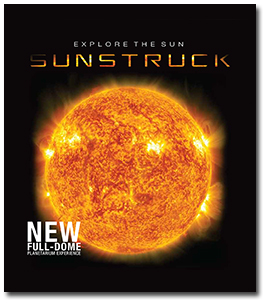
Sunstruck
Discover the wonders of our sun. Its incredible energy has supported life on earth
for millennia, but is now threatening our technology and way of life. Travel to the
distant future to discover our sun's connection to the universe's cosmic cycle of
life and death.
Grades: 6th and up
Supermassive Black Holes
Leading scientists in observational and theoretical studies of black holes and galaxies,
industrial experts in cutting-edge big technologies, and professionals in science
dissemination have been brought together to set up research projects which will combine
the latest state-of-the-art observations, numerical simulations and innovative analytic
tools to compare theory with observation, and shed light on the physics of black hole
formation in the context of galaxy evolution. This planetarium show presents the environments
of the black holes in an impressive and understandable way to the audience.
Grades: 8th and up
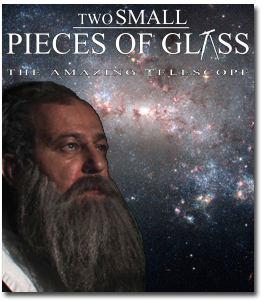
Two Small Pieces of Glass
Learn how the telescope has helped us understand our place in space and continue to
expand our understanding of the Universe. Explore the history of the telescope and
the discoveries these wonderful tools have made. See how telescopes work and how the
largest observatories in the world use them. View the Galilean Moons, Saturn's rings,
and spiral structure of galaxies. Learn about the discoveries of Galileo, Huygens,
Newton, Hubble, and others.
Grades: 5th and up
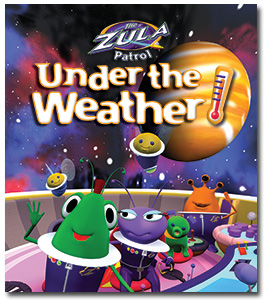
Under the Weather!
The stalwart heroes of The Zula Patrol are on an expedition collecting samples of
weather for scientist Multo's research. When the Zula gang inadvertently hurts their
loyal pet Gorga's feelings, he decides to leave Zula and find another planet to live
on. Villain Dark Truder then tricks Gorga into helping with his latest nefarious scheme
to rule the universe. The Zula Patrollers find out and go after him-in the process
learning all about weather, both terrestrial and interplanetary. Based on the hit
TV series.
Grades: Preschool - 3rd
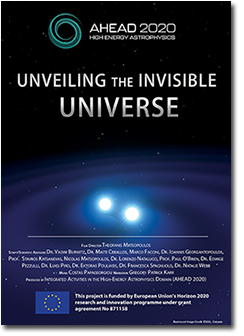
Unveiling the Invisible Universe
For thousands of years humans observed the light coming from the night sky with their
eyes. In the beginning of the 17th century, the invention of the telescope by Galileo
revolutionized our knowledge of the Universe. Finally, in the 20th century with the
advent of rockets, it became possible to go above the earth's atmosphere and observe
X-ray and gamma ray radiation which are the marks of the hot and violent Universe.
But it is not only light that can give us information about the cosmos. Neutrinos
and cosmic rays also provide vital information. Finally, the detection by the LIGO
experiment of gravitational waves from two merging black holes opened a new window
in astrophysics. This show presents images of the cosmos as revealed by all these
different messengers.
Grades: 8th and up
Violent Universe
The beauty of a starlit sky conceals the violent forces at work within our universe.
From the upheaval of a giant star that explodes to release its material into space,
to a future encounter between the Earth and a large asteroid that is too close for
comfort, we will witness the forces that hold the universe together and occasionally
try to rip it apart. Narrated by Patrick Stewart of Star Trek: The Next Generation
and the X-Men films.
Grades: 6th and up
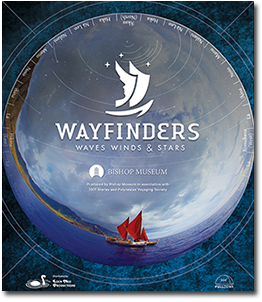
Wayfinders
This full-dome program puts you on the deck of the voyaging canoe Hōkūleʻa as you
explore the nearly lost art and science of non-instrument navigation in Hawaiʻi and
the Pacific. Produced by Bishop Museum in collaboration with Polynesian Voyaging Society
and 1001 Stories.
Grades: 6th and up
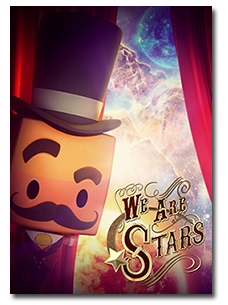
We Are Stars
What are we made of? Where did it all come from? Explore the secrets of our cosmic
chemistry, and our explosive origins. Connect life on Earth to the evolution of the
Universe by following the formation of Hydrogen atoms to the synthesis of Carbon,
and the molecules for life. Narrated by Andy Serkis.
Grades: 4th and up
Early Elementary
(Preschool - 1st Grade)
Live Shows
The following program is a live presentation. This involves student interactions and
participation. Each live presentation is tailored to the individual grade level. This
program is approximately 1 hour in length, and is not available during the summer. Please call us if you have questions about this show.
Preschool Sky
Basic awareness of the day and night sky are investigated with the help of models,
stories, and the planetarium projector. Due to the special characteristics of this
age group, the program length will vary between 30 minutes and an hour, according
to attention span.
Ages: 3-5 years
Pre-recorded Shows.
The following programs are recorded shows. Each lasts approximately 30 minutes and
is followed by a 30 minute live presentation of the current evening sky. The overall
presentation is approximately one hour in length.
Christmas Constellations
When we look at the stars, we can play a giant game of dot-to-dot. We can use our
imaginations to come up with amazing things from basic shapes to mythical creatures
to our favorite animals. In this show, we will use our imaginations for a search through
the stars for holiday themed shapes in the sky. This show is suitable for preschoolers,
young elementary aged children, and their families.
Offered only from Thanksgiving to Christmas
Grades: K - 3rd
In My Backyard
Join children's entertainer Fred Penner as he explores things large and small, from
the colors of the rainbow, to the reasons for the seasons. Through the use of entertaining
songs and immersive environments, children are encouraged to participate while learning
about the planets, constellations, meteors, the moon and more.
Grades: Preschool - 1st
One World, One Sky
You don't need a spaceship to learn about the sun, moon, and stars-just a little imagination!
When Big Bird, Elmo, and their friend from China, Hu Hu Zhu, take an imaginary trip
to the moon, they learn amazing things along the way.
Grades: Preschool - 1st
Our Place in Space
While solving a crossword puzzle about the sky, Scarlet Macaw and her friends explore
the cause of day and night, the importance of our star the Sun, the beauty of the
constellations, and the variety of objects that make up the Universe.
Grades: Preschool - 2nd
The Stellars
Introducing THE STELLARS, a show designed with the youngest audiences in mind. The
show weaves important educational themes into a character-driven story. It is the
perfect blend of fun and learning, carefully crafted to spark the imagination and
curiosity of young kids. The characters even break the “fourth wall” several times
to directly engage with the audience about their ideas. The educational content of
the show explores the essentials necessary for plant growth, the diversity of Earth's
ecosystems, and the critical role of forests as habitats. It underscores our bond
with nature and our role in preserving it, along with the importance of the scientific
method in understanding our world.
Under the Weather!
The stalwart heroes of The Zula Patrol are on an expedition collecting samples of
weather for scientist Multo's research. When the Zula gang inadvertently hurts their
loyal pet Gorga's feelings, he decides to leave Zula and find another planet to live
on. Villain Dark Truder then tricks Gorga into helping with his latest nefarious scheme
to rule the universe. The Zula Patrollers find out and go after him-in the process
learning all about weather, both terrestrial and interplanetary. Based on the hit
TV series.
Grades: Preschool - 3rd
Upper Elementary
(1st - 5th Grade)
Live Shows
The following programs are live presentations. These involve student interactions
and participation. Each live presentation is tailored to the individual grade level.
These programs are approximately 1 hour in length, and are not available during the summer. Please call us if you have questions about these shows.
Moonbeams
After watching the moon in the sky, students will look for ways to explain the changes
observed. Lunar folklore and moon travel also will be discussed.
Grades: 2nd - 5th
The Night Sky
A basic introduction to the sky. All of the bright planets and most of the brightest
stars and prominent constellations currently visible in the early evening will be
found. Storytelling and student interaction will be used to enhance learning.
Ages: All Ages
The Seasons
An overview of how the day and night sky change through the year. Students will predict
and observe how the sun's path changes over the year and learn how that relates to
changing seasons. They will learn why we see different constellations through the
year by looking from an earth and space-based perspective.
Grades: 4th - 6th
Sky Patterns
This show is geared toward early elementary students and addresses the 1st grade NGSS
standard about patterns in the sky. Students will orient themselves in the planetarium
using the Big and Little Dippers. Then they will make observations about day and night,
how the length of day changes through the seasons, and then how the Moon changes shape
over a month. Any time left will look at constellations in the sky.
Grades: K - 2nd
The Sun's Family
Solar system information is presented using models, photos, and student interaction.
Students learn to find the bright planets in the current sky.
Grades: K - 3rd
Pre-recorded Shows.
The following programs are recorded shows. Each lasts approximately 30 minutes and
is followed by a 30 minute live presentation of the current evening sky. The overall
presentation is approximately one hour in length.
Beyond the Sun
While going to sleep, Celeste is visited by a friendly particle of light called Moon.
Together, they travel beyond the Sun in search of new worlds and enjoy the delights
and mysteries of exoplanet hunting. Find out how to detect exoplanets with Celeste
and Moon and learn about all the different types of worlds including rogue planets,
oceanic worlds and super-Earths. Even more, learn about real-life exoplanet hunters
who observe the sky and search for other planets that are like Earth.
Grades: 1st - 5th
Big Astronomy
It takes many people with diverse backgrounds, talents, and skills to run a world-class
observatory. Meet a few of these people as they share the wonder of the sky--and the
excitement of discovery. Explore the world-class observatories nestled in northern
Chile’s mountains and learn why Chile, is an ideal environment for studying the cosmos.
Grades: 5th and up
Christmas Constellations
When we look at the stars, we can play a giant game of dot-to-dot. We can use our
imaginations to come up with amazing things from basic shapes to mythical creatures
to our favorite animals. In this show, we will use our imaginations for a search through
the stars for holiday themed shapes in the sky. This show is suitable for preschoolers,
young elementary aged children, and their families.
Offered only from Thanksgiving to Christmas
Grades: K - 3rd
Dinosaurs
Like almost all children, Celeste is fascinated with dinosaurs. She is preparing a
talk for her class about how they went extinct when Moon, a very wise and magical
character, poses a tantalizing question: what if I told you that there are still dinosaurs
among us? Celeste will join Moon in a journey through time. An exciting adventure
that will show them the Earth as it was in the very, very distant past. They will
see the fascinating transformations that these animals underwent over millions of
years, creating giant creatures, armored beasts and super predators, until the day
that a cataclysmic impact event caused a mass extinction on Earth. But all is not
lost. Celeste will discover the key to their survival.
Grades: 1st - 5th
The Great Solar System Adventure
Join showman extraordinaire “The Great Schiaparelli” as he takes the audience on a
death-defying space-time adventure within his wondrous Observatorium. From the sun-scorched
surface of Mercury to the icy expanses of Pluto and beyond, prepare to be subjected
to the myriad dangers and wonders of our Solar System, on a breathtaking tour that
reveals just how precious our home planet really is. Be warned though, the Observatorium
isn’t just for show. It will transport the audience right to the heart of some of
the deadliest locations in our slice of the heavens. It’s going to take some fancy
flying to get everyone back in one piece!
Grades: 2nd - 5th
Imagine the Moon
Explore how the Moon has inspired human creativity, learning, and exploration ever
since we have looked to the sky. Each discovery has brought new opportunities to contemplate
and imagine, until, driven by dreams, we left Earth and went there in the amazing
journeys that culminated in astronauts walking on the Moon. People have imagined the
Moon as a glowing disk in the sky, a destination in space, and a world that shares
its origin with the Earth. The power of human imagination continues to inspire our
relationship with the Moon as our partner in space and companion in our sky.
Grades: 5th and up
The Little Star That Could
The story about an average yellow star on a search for planets of his own to warm
and protect. Along his way, he encounters other stars, learns what makes each star
special, and discovers that stars can combine to form clusters and galaxies. Eventually,
Little Star finds his planets, and each is introduced to audiences along with basic
information about the Solar System.
Grades: 2nd - 5th
North Star and Meteors
Listen to stories of the stars told by Native American Master Storytellers. In this
show, you will hear two stories. "Why the North Star Stands Still" retold by Lynn
Moroney (Chickasaw) and "Coyote and the Dancing Stars" retold by Lynn Moroney (Chickasaw).
Grades: 3rd and up
Our Place in Space
While solving a crossword puzzle about the sky, Scarlet Macaw and her friends explore
the cause of day and night, the importance of our star the Sun, the beauty of the
constellations, and the variety of objects that make up the Universe.
Grades: Preschool - 2nd
Perfect Little Planet
Discover our solar system through a new set of eyes-a family from another star system
seeking the perfect vacation spot. Fly over the surface of Pluto, our best known Dwarf
Planet. Dive down the ice cliffs of Miranda. Sail through the rings of Saturn. Feel
the lightning storms at Jupiter. And walk on the surface of Mars. Which destination
would you choose?
Grades: 1st - 5th
Seasons and the Moon
Listen to stories of the stars told by Native American Master Storytellers. In this
show, you will hear two stories. "Spring Defeats Winter" retold by Joseph Bruchac
(Abenaki) and "The Girl Who Married the Moon" retold by Gayle Ross (Cherokee).
Grades: 3rd and up
Skywatchers of Africa
For thousands of years, Africans have used their knowledge of the sky to build their
societies, shape their spiritual lives, and meet their physical needs for survival.
Skywatchers of Africa highlights the diversity of African astronomy, examines cultural
uses of the sky that developed throughout history, and celebrates our shared human
experience.
Grades: 5th and up
The Stellars
Introducing THE STELLARS, a show designed with the youngest audiences in mind. The
show weaves important educational themes into a character-driven story. It is the
perfect blend of fun and learning, carefully crafted to spark the imagination and
curiosity of young kids. The characters even break the “fourth wall” several times
to directly engage with the audience about their ideas. The educational content of
the show explores the essentials necessary for plant growth, the diversity of Earth's
ecosystems, and the critical role of forests as habitats. It underscores our bond
with nature and our role in preserving it, along with the importance of the scientific
method in understanding our world.
Two Small Pieces of Glass
Learn how the telescope has helped us understand our place in space and continue to
expand our understanding of the Universe. Explore the history of the telescope and
the discoveries these wonderful tools have made. See how telescopes work and how the
largest observatories in the world use them. View the Galilean Moons, Saturn's rings,
and spiral structure of galaxies. Learn about the discoveries of Galileo, Huygens,
Newton, Hubble, and others.
Grades: 5th and up
Under the Weather!
The stalwart heroes of The Zula Patrol are on an expedition collecting samples of
weather for scientist Multo's research. When the Zula gang inadvertently hurts their
loyal pet Gorga's feelings, he decides to leave Zula and find another planet to live
on. Villain Dark Truder then tricks Gorga into helping with his latest nefarious scheme
to rule the universe. The Zula Patrollers find out and go after him-in the process
learning all about weather, both terrestrial and interplanetary. Based on the hit
TV series.
Grades: Preschool - 3rd
We Are Stars
What are we made of? Where did it all come from? Explore the secrets of our cosmic
chemistry, and our explosive origins. Connect life on Earth to the evolution of the
Universe by following the formation of Hydrogen atoms to the synthesis of Carbon,
and the molecules for life. Narrated by Andy Serkis.
Grades: 4th and up
Middle & High School
Live Shows
The following program is a live presentation. This involves student interactions and
participation. Each live presentation is tailored to the individual grade level. This
program is approximately 1 hour in length, and is not available during the summer. Please call us if you have questions about this show.
The Night Sky
A basic introduction to the sky. All of the bright planets and most of the brightest
stars and prominent constellations currently visible in the early evening will be
found. Storytelling and student interaction will be used to enhance learning.
Ages: All Ages
Pre-recorded Shows.
The following programs are recorded shows. Each lasts approximately 30 minutes and
is followed by a 30 minute live presentation of the current evening sky. The overall
presentation is approximately one hour in length.
A Teenager's Guide to the Galaxy
Created and hosted by cosmically curious teenagers from Milwaukee schools, this unique
cosmic experience takes you on a dynamic journey across the universe and through time.
Science Topics Include: Black Holes, Cosmology--Origins & Fate of the Universe, Star
Cycles, Sun, Earth Origins & History, Water Origins & Chemistry.
Grades: 6th and up
Back to the Moon for Good
This award-winning Google Lunar XPRIZE fulldome planetarium show chronicles teams
around the world competing for the largest international incentivized prize in history,
by landing a robotic spacecraft on the Moon. The show opens with the first era of
space exploration in the late 1960s and early 1970s and ends with a stunning glimpse
of a plausible scenario for our future on the Moon.
Grades: 6th and up
Bad Astronomy
Were the Apollo visits to the Moon actually a hoax? Have aliens landed on Earth? Can
you tell your future by the stars? Prepare to debunk and tackle pseudoscience head-on
with this planetarium show. Based on the popular book and website of the same name,
this show offers a unique and fun approach to learning about the cosmos. Join the
"Bad Astronomer" Phil Plait as he takes a critical look at popular myths and misconceptions
to show audiences how science can be used to evaluate questionable claims.
Grades: 6th and up
Big Astronomy
It takes many people with diverse backgrounds, talents, and skills to run a world-class
observatory. Meet a few of these people as they share the wonder of the sky--and the
excitement of discovery. Explore the world-class observatories nestled in northern
Chile’s mountains and learn why Chile, is an ideal environment for studying the cosmos.
Grades: 5th and up
Chasing the Ghost Particle
Deep in the ice at the heart of Antarctica, IceCube, the biggest and strangest detector
in the world waits for mysterious messengers from the cosmos. Scientists are using
tiny and elusive particles called neutrinos to explore the most extreme places in
the universe. These ghostly neutrinos give us an exclusive way to study powerful cosmic
engines like exploding stars and black holes. In this show, stunning simulations of
the most energetic places in our universe, and the galaxies around us, are the prelude
to a thrilling journey inside IceCube, looking for traces of neutrino collisions in
the ice. From one of the most remote locations on Earth to the unexplored regions
of the cosmos, this show will take you on a journey you won't forget.
Grades: 8th and up
The Cosmic Recipe
Pull up a chair at our Planetarium’s Periodic Table and learn the cosmic recipes that
created everything in our world-even us! Discover how the Big Bang and the stars have
cooked up the everyday elements we interact with every day-like the calcium in our
teeth, the silicon in our smartphones, and even the carbon in our apple pies. Explore
the world of chemistry-the protons, neutrons and electrons! See how tiny atoms relate
to the mammoth stars! Connect the physical worlds of the small and large in this engaging
and inspiring show.
Grades: 6th and up
The Dark Matter Mystery
What keeps Galaxies together? What are the building blocks of the Universe? What makes
the Universe look the way it looks today? Researchers all around the world try to
answer these questions. We know today that approximately a quarter of the Universe
is filled with a mysterious glue: Dark Matter. We know that it is out there. But we
have no idea what it is made out of. This planetarium show takes you on the biggest
quest of contemporary astrophysics. You will see why we know that Dark Matter exists,
and how this search is one of the most challenging and exciting searches science has
to offer. Join the scientists on their hunt for Dark Matter with experiments in space
and deep underground. Will they be able to solve the Dark Matter Mystery?
Grades: 8th and up
Experience the Aurora
Over seven months in the Arctic Circle, our crews captured timelapse images of the
Aurora Borealis with high resolution digital SLR cameras outfitted with fisheye lenses.
The results are spectacular. For the first time the aurora has been captured as it
was meant to be experienced, as a display that covers the entire sky. This immersive
show shares the science behind the aurora and tells the story of our quest to find
and photograph the aurora for wraparound display in fulldome theaters.
Grades: 6th and up
From Earth to the Universe
Follow along as we leave our home to take you out to the colorful birthplaces and
burial grounds of stars, and still further out, beyond the Milky Way, to the unimaginable
immensity of a myriad galaxies. Along the way, you will learn about the history of
astronomy, the invention of the telescope, and today's giant telescopes that allow
us continue to probe ever deeper into the Universe.
Grades: 6th and up
The Hot and Energetic Universe
This show describes the basic principles electromagnetic radiation and the natural
phenomena related to high energy astrophysics. High energy astrophysics plays a key
role in understanding the universe. These radiations reveal the processes in the hot
and violent universe. High energy astrophysics probes hot gas in clusters of galaxies,
which are the most massive objects in the universe. It also probes hot gas accreting
around supermassive black holes in the centers of galaxies. Finally, high energy radiation
provides important information about our own galaxy, neutron stars, supernova remnants
and stars like our Sun which emit copious amounts of high energy radiation.
Grades: 8th and up
Ice Worlds
The delicate balance between ice, water and the existence of life has been a topic
of exploration and discovery in science for generations. In travels to the Arctic
and Antarctic regions of our planet, we'll examine the ecosystems that live and thrive
there and see how their survival is connected with our own. Beyond Earth, we'll see
how the existence of ice shapes the landscape and the natural systems on other planets
and moons in our solar system.
Grades: 6th and up
Imagine the Moon
Explore how the Moon has inspired human creativity, learning, and exploration ever
since we have looked to the sky. Each discovery has brought new opportunities to contemplate
and imagine, until, driven by dreams, we left Earth and went there in the amazing
journeys that culminated in astronauts walking on the Moon. People have imagined the
Moon as a glowing disk in the sky, a destination in space, and a world that shares
its origin with the Earth. The power of human imagination continues to inspire our
relationship with the Moon as our partner in space and companion in our sky.
Grades: 5th and up
Living in Balance
Living in Balance: Anishinaabe Star Knowledge highlights Anishinaabe stories of constellations
and moons in relation to contemporary insights about environmental changes. Teachings
shared by Native Skywatchers Carl Gawboy, William Wilson, and Dr. Annette S. Lee are
narrated by Aarin Dokum with Anishinaabemowin translations by Alphonse Pitawanakwat
set to art by Elizabeth LaPensée.
Grades: 5th and up
Mayan Archaeoastronomy
In a feast of colors and sounds, this show takes a tour of 6 Mayan temples: San Gervasio,
Chichen Itzá, Uxmal, Edzná, Palenque and Bonampak where the spectator dives into a
Mayan world of knowledge about the importance of the orientations of its temples in
relation to the movement of some stars like the Sun, the Moon and Venus.
Grades: 8th and up
Messengers of Time and Space
This planetarium show highlights how Gemini will work together with observatories
that monitor the night sky for exciting astronomical events that change with time,
like Rubin Observatory. Sometimes, light is not the only indicator of these short-term
events. Audiences will learn how information can reach us through other messengers
like cosmic rays, elusive particles called neutrinos, and even gravitational waves
rippling through the Universe.
Grades: 8th and up
Natural Selection
"Natural Selection" celebrates the 150th anniversary of the publication of "On the
Origin of Species" and the 200th anniversary of Charles Darwin's birth. We will join
Darwin on his voyage with the HMS Beagle to the Galapagos Islands where he was inspired
to develop his later theory of transmutation by natural selection. From the comfort
of Down House in Kent, Darwin himself will explain the mechanism of natural selection
to the audience, and support it by showing many beautiful examples in nature. Even
though this show focuses on biology and evolution, a brief astronomical sky talk will
follow.
Grades: 8th and up
Out There: The Quest for Extrasolar Worlds
Out There: The Quest for Extrasolar Worlds shows how our perception of our place in
the Universe has changed and how the discoveries of exoplanets we made in the last
decades even surpassed the dreams of science fiction authors.
Grades: 6th and up
Phantom of the Universe
Join us as we showcase an exciting exploration of dark matter, from the Big Bang to
its anticipated discovery at the Large Hadron Collider. See the first hints of its
existence through the eyes of Fritz Zwicky, the scientist who coined the term "dark
matter." From there explore the astral choreography witnessed by Vera Rubin in the
Andromeda Galaxy and then plummet deep underground to see the most sensitive dark
matter detector on Earth, housed in a former gold mine. Finally journey across space
and time to the Large Hadron Collider at CERN, to learn how scientists around the
world are collaborating to track down the constituents of dark matter.
Grades: 8th and up
Rising Star
Rising Star takes you on an astronomical journey from our beginnings through the development
of astronomy research in South Africa and looks at what the future of astronomy holds
for the country. In addition to introducing multi-wavelength and multi-messenger astronomy,
it highlights the many remarkable facilities hosted in South Africa along with some
of their latest results. This includes unrestricted views of the 10-metre class Southern
African Large Telescope and the most powerful radio telescope in the Southern Hemisphere,
MeerKAT. The film is accessible to all ages and aims to excite audiences from around
the world about South African astronomy, while inspiring the next generation of astronomers.
As the first of its kind to be produced in Africa, Rising Star hopes to stimulate
the production of many more locally produced planetarium films from multidisciplinary
fields, with the goal of popularizing Africa’s numerous scientific achievements.
Grades: 8th and up
Skywatchers of Africa
For thousands of years, Africans have used their knowledge of the sky to build their
societies, shape their spiritual lives, and meet their physical needs for survival.
Skywatchers of Africa highlights the diversity of African astronomy, examines cultural
uses of the sky that developed throughout history, and celebrates our shared human
experience.
Grades: 5th and up
The Sun Our Living Star
The Sun has shone on our world for four and a half billion years. The light that warms
our skin today has been felt by every person who has ever lived. It is our nearest
star and our planet's powerhouse, the source of the energy that drives our winds,
our weather and all life. The passage of the Sun's fiery disc across the sky - day
by day, month by month - was the only way to keep track of time for countless past
civilizations. Discover the secrets of our star in this planetarium show and experience
never-before-seen images of the Sun's violent surface in immersive fulldome format.
Grades: 6th and up
Sunstruck
Discover the wonders of our sun. Its incredible energy has supported life on earth
for millennia, but is now threatening our technology and way of life. Travel to the
distant future to discover our sun's connection to the universe's cosmic cycle of
life and death.
Grades: 6th and up
Supermassive Black Holes
Leading scientists in observational and theoretical studies of black holes and galaxies,
industrial experts in cutting-edge big technologies, and professionals in science
dissemination have been brought together to set up research projects which will combine
the latest state-of-the-art observations, numerical simulations and innovative analytic
tools to compare theory with observation, and shed light on the physics of black hole
formation in the context of galaxy evolution. This planetarium show presents the environments
of the black holes in an impressive and understandable way to the audience.
Grades: 8th and up
Two Small Pieces of Glass
Learn how the telescope has helped us understand our place in space and continue to
expand our understanding of the Universe. Explore the history of the telescope and
the discoveries these wonderful tools have made. See how telescopes work and how the
largest observatories in the world use them. View the Galilean Moons, Saturn's rings,
and spiral structure of galaxies. Learn about the discoveries of Galileo, Huygens,
Newton, Hubble, and others.
Grades: 5th and up
Unveiling the Invisible Universe
For thousands of years humans observed the light coming from the night sky with their
eyes. In the beginning of the 17th century, the invention of the telescope by Galileo
revolutionized our knowledge of the Universe. Finally, in the 20th century with the
advent of rockets, it became possible to go above the earth's atmosphere and observe
X-ray and gamma ray radiation which are the marks of the hot and violent Universe.
But it is not only light that can give us information about the cosmos. Neutrinos
and cosmic rays also provide vital information. Finally, the detection by the LIGO
experiment of gravitational waves from two merging black holes opened a new window
in astrophysics. This show presents images of the cosmos as revealed by all these
different messengers.
Grades: 8th and up
Violent Universe
The beauty of a starlit sky conceals the violent forces at work within our universe.
From the upheaval of a giant star that explodes to release its material into space,
to a future encounter between the Earth and a large asteroid that is too close for
comfort, we will witness the forces that hold the universe together and occasionally
try to rip it apart. Narrated by Patrick Stewart of Star Trek: The Next Generation
and the X-Men films.
Grades: 6th and up
Wayfinders
This full-dome program puts you on the deck of the voyaging canoe Hōkūleʻa as you
explore the nearly lost art and science of non-instrument navigation in Hawaiʻi and
the Pacific. Produced by Bishop Museum in collaboration with Polynesian Voyaging Society
and 1001 Stories.
Grades: 6th and up
General Audiences
Live Shows
The following programs are live presentations. These involve student interactions
and participation. Each live presentation is tailored to the individual grade level.
These programs are approximately 1 hour in length, and are not available during the summer. Please call us if you have questions about these shows.
The Night Sky
A basic introduction to the sky. All of the bright planets and most of the brightest
stars and prominent constellations currently visible in the early evening will be
found. Storytelling and student interaction will be used to enhance learning.
Ages: All Ages
Pre-recorded Shows.
The following programs are recorded shows. Each lasts approximately 30 minutes and
is followed by a 30 minute live presentation of the current evening sky. The overall
presentation is approximately one hour in length.
Back to the Moon for Good
This award-winning Google Lunar XPRIZE fulldome planetarium show chronicles teams
around the world competing for the largest international incentivized prize in history,
by landing a robotic spacecraft on the Moon. The show opens with the first era of
space exploration in the late 1960s and early 1970s and ends with a stunning glimpse
of a plausible scenario for our future on the Moon.
Grades: 6th and up
Big Astronomy
It takes many people with diverse backgrounds, talents, and skills to run a world-class
observatory. Meet a few of these people as they share the wonder of the sky--and the
excitement of discovery. Explore the world-class observatories nestled in northern
Chile’s mountains and learn why Chile, is an ideal environment for studying the cosmos.
Grades: 5th and up
Column 3
Chasing the Ghost Particle
Deep in the ice at the heart of Antarctica, IceCube, the biggest and strangest detector
in the world waits for mysterious messengers from the cosmos. Scientists are using
tiny and elusive particles called neutrinos to explore the most extreme places in
the universe. These ghostly neutrinos give us an exclusive way to study powerful cosmic
engines like exploding stars and black holes. In this show, stunning simulations of
the most energetic places in our universe, and the galaxies around us, are the prelude
to a thrilling journey inside IceCube, looking for traces of neutrino collisions in
the ice. From one of the most remote locations on Earth to the unexplored regions
of the cosmos, this show will take you on a journey you won't forget.
Grades: 8th and up
The Dark Matter Mystery
What keeps Galaxies together? What are the building blocks of the Universe? What makes
the Universe look the way it looks today? Researchers all around the world try to
answer these questions. We know today that approximately a quarter of the Universe
is filled with a mysterious glue: Dark Matter. We know that it is out there. But we
have no idea what it is made out of. This planetarium show takes you on the biggest
quest of contemporary astrophysics. You will see why we know that Dark Matter exists,
and how this search is one of the most challenging and exciting searches science has
to offer. Join the scientists on their hunt for Dark Matter with experiments in space
and deep underground. Will they be able to solve the Dark Matter Mystery?
Grades: 8th and up
Experience the Aurora
Over seven months in the Arctic Circle, our crews captured timelapse images of the
Aurora Borealis with high resolution digital SLR cameras outfitted with fisheye lenses.
The results are spectacular. For the first time the aurora has been captured as it
was meant to be experienced, as a display that covers the entire sky. This immersive
show shares the science behind the aurora and tells the story of our quest to find
and photograph the aurora for wraparound display in fulldome theaters.
Grades: 6th and up
From Earth to the Universe
Follow along as we leave our home to take you out to the colorful birthplaces and
burial grounds of stars, and still further out, beyond the Milky Way, to the unimaginable
immensity of a myriad galaxies. Along the way, you will learn about the history of
astronomy, the invention of the telescope, and today's giant telescopes that allow
us continue to probe ever deeper into the Universe.
Grades: 6th and up
The Hot and Energetic Universe
This show describes the basic principles electromagnetic radiation and the natural
phenomena related to high energy astrophysics. High energy astrophysics plays a key
role in understanding the universe. These radiations reveal the processes in the hot
and violent universe. High energy astrophysics probes hot gas in clusters of galaxies,
which are the most massive objects in the universe. It also probes hot gas accreting
around supermassive black holes in the centers of galaxies. Finally, high energy radiation
provides important information about our own galaxy, neutron stars, supernova remnants
and stars like our Sun which emit copious amounts of high energy radiation.
Grades: 8th and up
Ice Worlds
The delicate balance between ice, water and the existence of life has been a topic
of exploration and discovery in science for generations. In travels to the Arctic
and Antarctic regions of our planet, we'll examine the ecosystems that live and thrive
there and see how their survival is connected with our own. Beyond Earth, we'll see
how the existence of ice shapes the landscape and the natural systems on other planets
and moons in our solar system.
Grades: 6th and up
Imagine the Moon
Explore how the Moon has inspired human creativity, learning, and exploration ever
since we have looked to the sky. Each discovery has brought new opportunities to contemplate
and imagine, until, driven by dreams, we left Earth and went there in the amazing
journeys that culminated in astronauts walking on the Moon. People have imagined the
Moon as a glowing disk in the sky, a destination in space, and a world that shares
its origin with the Earth. The power of human imagination continues to inspire our
relationship with the Moon as our partner in space and companion in our sky.
Grades: 5th and up
Isaac Asimov's The Last Question
Can entropy be reversed? What is the fate of the universe? Explore these questions
in this timeless short story written by one of the greatest science fiction authors
of the 20th century.
Living in Balance
Living in Balance: Anishinaabe Star Knowledge highlights Anishinaabe stories of constellations
and moons in relation to contemporary insights about environmental changes. Teachings
shared by Native Skywatchers Carl Gawboy, William Wilson, and Dr. Annette S. Lee are
narrated by Aarin Dokum with Anishinaabemowin translations by Alphonse Pitawanakwat
set to art by Elizabeth LaPensée.
Grades: 5th and up
Mayan Archaeoastronomy
In a feast of colors and sounds, this show takes a tour of 6 Mayan temples: San Gervasio,
Chichen Itzá, Uxmal, Edzná, Palenque and Bonampak where the spectator dives into a
Mayan world of knowledge about the importance of the orientations of its temples in
relation to the movement of some stars like the Sun, the Moon and Venus.
Grades: 8th and up
Messengers of Time and Space
This planetarium show highlights how Gemini will work together with observatories
that monitor the night sky for exciting astronomical events that change with time,
like Rubin Observatory. Sometimes, light is not the only indicator of these short-term
events. Audiences will learn how information can reach us through other messengers
like cosmic rays, elusive particles called neutrinos, and even gravitational waves
rippling through the Universe.
Grades: 8th and up
Natural Selection
"Natural Selection" celebrates the 150th anniversary of the publication of "On the
Origin of Species" and the 200th anniversary of Charles Darwin's birth. We will join
Darwin on his voyage with the HMS Beagle to the Galapagos Islands where he was inspired
to develop his later theory of transmutation by natural selection. From the comfort
of Down House in Kent, Darwin himself will explain the mechanism of natural selection
to the audience, and support it by showing many beautiful examples in nature. Even
though this show focuses on biology and evolution, a brief astronomical sky talk will
follow.
Grades: 8th and up
Out There: The Quest for Extrasolar Worlds
Out There: The Quest for Extrasolar Worlds shows how our perception of our place in
the Universe has changed and how the discoveries of exoplanets we made in the last
decades even surpassed the dreams of science fiction authors.
Grades: 6th and up
Phantom of the Universe
Join us as we showcase an exciting exploration of dark matter, from the Big Bang to
its anticipated discovery at the Large Hadron Collider. See the first hints of its
existence through the eyes of Fritz Zwicky, the scientist who coined the term "dark
matter." From there explore the astral choreography witnessed by Vera Rubin in the
Andromeda Galaxy and then plummet deep underground to see the most sensitive dark
matter detector on Earth, housed in a former gold mine. Finally journey across space
and time to the Large Hadron Collider at CERN, to learn how scientists around the
world are collaborating to track down the constituents of dark matter.
Grades: 8th and up
Pink Floyd
Fully immerse yourself in Pink Floyd's Dark Side of the Moon in our planetarium theater with our stunning visuals that make this album come to
life.
Rising Star
Rising Star takes you on an astronomical journey from our beginnings through the development
of astronomy research in South Africa and looks at what the future of astronomy holds
for the country. In addition to introducing multi-wavelength and multi-messenger astronomy,
it highlights the many remarkable facilities hosted in South Africa along with some
of their latest results. This includes unrestricted views of the 10-metre class Southern
African Large Telescope and the most powerful radio telescope in the Southern Hemisphere,
MeerKAT. The film is accessible to all ages and aims to excite audiences from around
the world about South African astronomy, while inspiring the next generation of astronomers.
As the first of its kind to be produced in Africa, Rising Star hopes to stimulate
the production of many more locally produced planetarium films from multidisciplinary
fields, with the goal of popularizing Africa’s numerous scientific achievements.
Grades: 8th and up
Season of Light
Many of the familiar customs that we observe this time of year have an astronomical
connection. Our holiday offering explores the traditions that we associate with this
special season.
Offered only from Thanksgiving to Christmas
Skywatchers of Africa
For thousands of years, Africans have used their knowledge of the sky to build their
societies, shape their spiritual lives, and meet their physical needs for survival.
Skywatchers of Africa highlights the diversity of African astronomy, examines cultural
uses of the sky that developed throughout history, and celebrates our shared human
experience.
Grades: 5th and up
The Sun Our Living Star
The Sun has shone on our world for four and a half billion years. The light that warms
our skin today has been felt by every person who has ever lived. It is our nearest
star and our planet's powerhouse, the source of the energy that drives our winds,
our weather and all life. The passage of the Sun's fiery disc across the sky - day
by day, month by month - was the only way to keep track of time for countless past
civilizations. Discover the secrets of our star in this planetarium show and experience
never-before-seen images of the Sun's violent surface in immersive fulldome format.
Grades: 6th and up
Sunstruck
Discover the wonders of our sun. Its incredible energy has supported life on earth
for millennia, but is now threatening our technology and way of life. Travel to the
distant future to discover our sun's connection to the universe's cosmic cycle of
life and death.
Grades: 6th and up
Supermassive Black Holes
Leading scientists in observational and theoretical studies of black holes and galaxies,
industrial experts in cutting-edge big technologies, and professionals in science
dissemination have been brought together to set up research projects which will combine
the latest state-of-the-art observations, numerical simulations and innovative analytic
tools to compare theory with observation, and shed light on the physics of black hole
formation in the context of galaxy evolution. This planetarium show presents the environments
of the black holes in an impressive and understandable way to the audience.
Grades: 8th and up
Two Small Pieces of Glass
Learn how the telescope has helped us understand our place in space and continue to
expand our understanding of the Universe. Explore the history of the telescope and
the discoveries these wonderful tools have made. See how telescopes work and how the
largest observatories in the world use them. View the Galilean Moons, Saturn's rings,
and spiral structure of galaxies. Learn about the discoveries of Galileo, Huygens,
Newton, Hubble, and others.
Grades: 5th and up
Unveiling the Invisible Universe
For thousands of years humans observed the light coming from the night sky with their
eyes. In the beginning of the 17th century, the invention of the telescope by Galileo
revolutionized our knowledge of the Universe. Finally, in the 20th century with the
advent of rockets, it became possible to go above the earth's atmosphere and observe
X-ray and gamma ray radiation which are the marks of the hot and violent Universe.
But it is not only light that can give us information about the cosmos. Neutrinos
and cosmic rays also provide vital information. Finally, the detection by the LIGO
experiment of gravitational waves from two merging black holes opened a new window
in astrophysics. This show presents images of the cosmos as revealed by all these
different messengers.
Grades: 8th and up
Violent Universe
The beauty of a starlit sky conceals the violent forces at work within our universe.
From the upheaval of a giant star that explodes to release its material into space,
to a future encounter between the Earth and a large asteroid that is too close for
comfort, we will witness the forces that hold the universe together and occasionally
try to rip it apart. Narrated by Patrick Stewart of Star Trek: The Next Generation
and the X-Men films.
Grades: 6th and up
Wayfinders
This full-dome program puts you on the deck of the voyaging canoe Hōkūleʻa as you
explore the nearly lost art and science of non-instrument navigation in Hawaiʻi and
the Pacific. Produced by Bishop Museum in collaboration with Polynesian Voyaging Society
and 1001 Stories.
Grades: 6th and up